Don’t mind the dismissive implications of this question, usually people mean well when they ask it. There’s a sort of innocence about the moment, where suddenly everyone is transported to a scene from Indiana Jones and trying to picture the person standing in front of them doing that and you’re just like, “no, sorry, not that.” I’m uniquely positioned because I have a professional degree in public health and medical anthropology overlaps with the field, so I can easily break it down to a case study and the simple answer, “I study the relationship between health and culture.” Being simple, this is also reductive, but I try to make up for that with the theoretical richness of the example I share. People usually relate to the key concepts: everyone has been naked in front of their doctor and felt the squirmy pressure of the clinical gaze, for instance. They just might not understand how that same look reproduces systems of power like white supremacy, misogyny, and ethnic hierarchy and creates and perpetuates health disparities for marginalized groups.
So, that’s what I study, and on any given day I am reading, writing, and researching the ways that socially othered groups experience health problems because of structural vulnerability and stigma— yay! See the roots of my cynicism yet? When I work in the field (which is sporadic based on funding, opportunities, and my one-day dissertation proposal), I do interviews, take field notes, and attend social gatherings of all kinds to conduct what is called “participant-observation.” The role of the anthropologist depends on their in-betweenness, their intermediary status as a both an insider and an outsider in the group, and this tension is reflected in the main mode of data collection: you must both participate and observe, take part and record your findings. These data, the most qualitative and inductive possible, provide insight into social patterns and meaning that cannot be expressed as numbers. In many cases, however, these nuanced findings also match up to population-level trends caused by structural violence. In sum, such data helps activists and advocates build an argument about expanding human rights definitions, increasing access to healthcare, and reclaiming democratic power.
In other words, no I do not study the health of ancient civilizations or diagnose human remains—although I now know people who do! Rather, I study the ways that socially constructed difference produces violence among people that leads to normalized and unequal suffering. It’s a resounding truth that tells its story again and again in the study of humankind; I’m always happy to share what I’ve learned, if you care to listen.
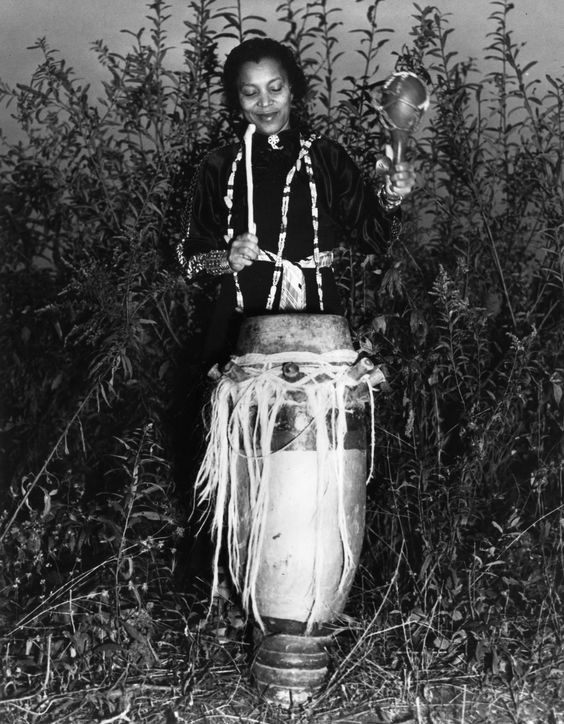
[Image of Zora Neale Hurston conducting ethnographic research in Haiti in 1936, from the Association to Preserve the Eatonville Community and posted online by the Florida Historical Society.]
 skeptiki