
This is a long, long overdue post.
First of all, I took a hiatus. Billy Pilgrim has become unstuck in time. Being hospitalized was my body telling me to slow the fuck down (sorry, egregious cursing is one of my most effective self-soothing methods), but since it was the beginning of the semester I was sure I could still handle my 70ish hour work week from bed. Turns out, I was wrong, and just as I was launching this little project everything in my life began to slip out of my control. (As I mentioned before, not least of which was my bowels.) I was behind on every deadline and some even snuck up on me unawares, a first in my imperfect but still rigorous academic career. I became more and more depressed with every follow-up email, every request for extensions, until I was not granted my requests and had a meltdown. Per the medical usage, panic attacks are brief periods of intensified, well, panic. But what I have goes beyond that now (don’t worry, I still get garden-variety panic attacks too! They just slip under the radar with a little lavender EO.). I feel like this passage from After Leaving Mr. McKenzie, which sticks in my mind every time I feel my pressure rising:
[excerpt]
Anyway, this was mostly a preface to say I’m sorry, imaginary audience, and I hope your feelings weren’t too hurt by my year off. To be honest I can’t promise you that it won’t happen again… but for now, I’m going to use this connection to Victorian-era feminist literature to talk about what I’ve read since I last wrote.
I took the GoodReads Challenge (friend me y’all) and read 35 books last year, in large part because I decided to take a semester off. It was a time for me to rethink what I wanted to do with my everyday life, and I knew that the academic pressure on my reading and writing practice was dulling my love for both activities, which are less pastimes and more lifelines to me. So in addition to working my way up to early mornings, well-rounded nutrition, and daily exercise, I also began to practice reading and writing for fun. Like the inevitable bicycle metaphor, it was spotty and swervy at first, but after a few dips into short stories and poetry I found myself consuming “big” novels again and even (gasp!) reading an entire book by Michel Foucault. (That was in peak conditioning.) I joke about reading and writing as an exercise in form, but just like with my track and swimming races, making a daily habit preparing for the big event helps you envision your task and execute it smoothly, automatically even. You can’t truly push yourself in any goal until you reach this point. (She says as she continues to fall weeks behind on a major writing deadline…)
Five hundred words and I still can’t say what I came to say. I will post again about my writing habits, but in recreating my reading practice I turned first to what I love most: Victorian-era feminist literature. Namely, my bygone immortal soulmate, Virginia Woolf. 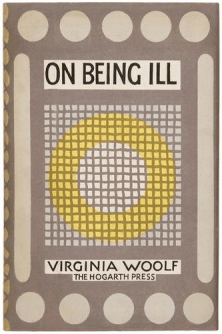 After I stopped being so depressed by the unplanned caesura in my life that I couldn’t do much but cry in bed (approximately two to three weeks in), I ordered a copy of On Being Ill. It’s such a tiny little thing but I decided I needed it, since the feeling of reading it in college was haunting me as I found myself spending more and more time against a pillow, looking out a window. Classic Virginia Woolf. I recommend the text to anyone going through an illness and struggling to process it creatively. Though it vexes me, my favorite part of the essay is when she loses the thread of her argument entirely and begins describing a book she’s reading—or a book that she could be reading, it’s unclear whether the plot actually exists outside of this rambling outro. She portrays the relationships and scenes in this sub-story with such detail that you forget what she was even saying before… something about staring out a window and losing yourself in the echoes of unspent time and an uneasy mind? It’s such an irritating loss of style but it perfectly communicates her point anyway. Mostly I love the piece for its elegant phrasing, the moments where she repurposes language toward her own devices of illuminating the semantic darkness of being sick.
After revisiting Virginia, that sickly kindred spirit, I took an adjacent path to Kazuo Ishigiro’s historic fiction. I consumed The Buried Giant in days—it was a beautiful tribute to classics of medieval storytelling like Sir Gawain and the Green Knight and other tales of King Arthur’s Court, but it was also a highly anthropological, historicized rendering of the everyday experience of existing in post-Arthurian times. With my bare knowledge of 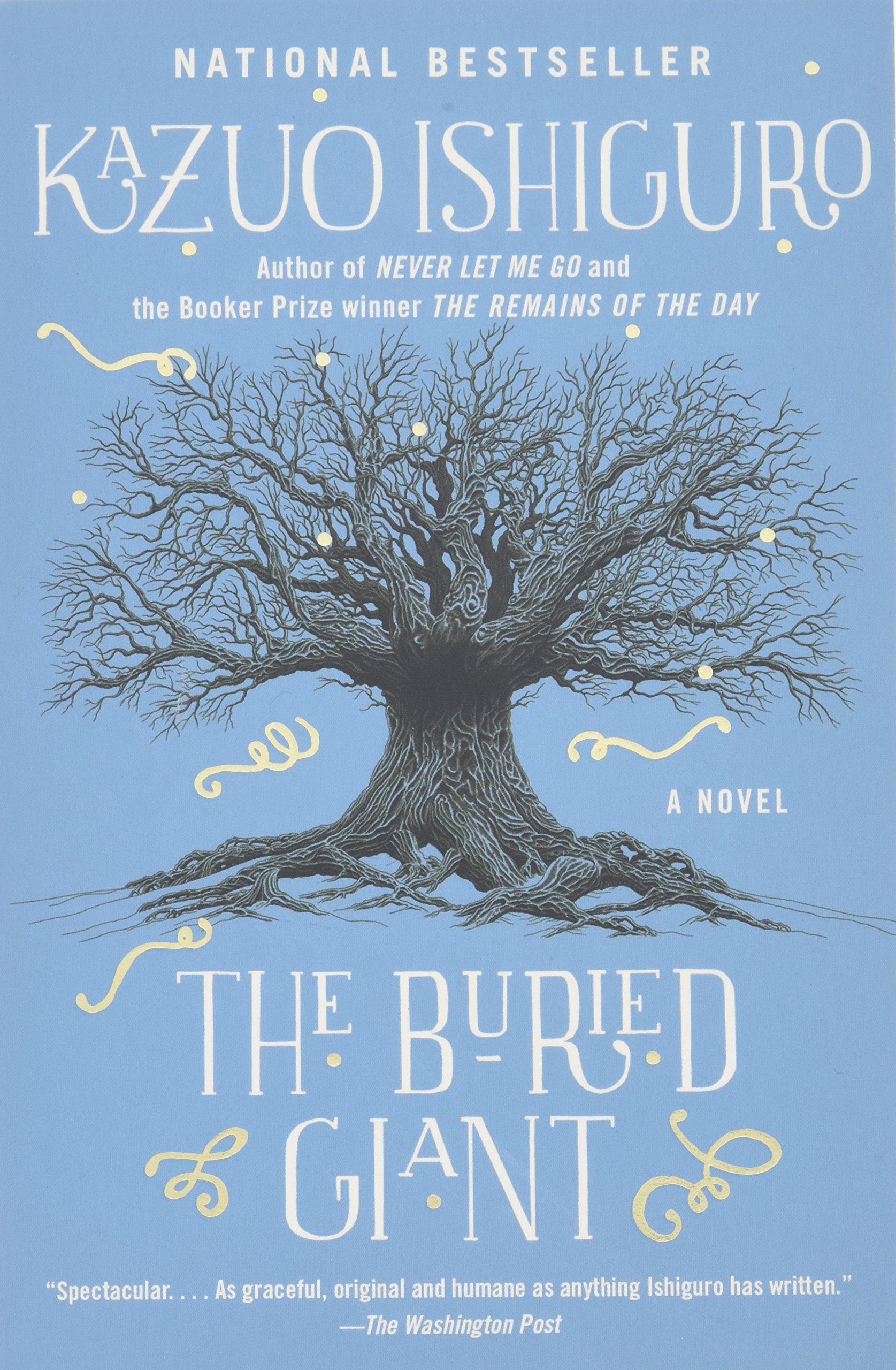 British history, I could tell that Ishigiro had scraped all the historical, archaeological, literary and mythological fragments of that time in the isles’ legacy to produce this reimagining. What follows is a beautiful love story of human allegiances to self, partner, ilk, and other. In another periodic style, The Remains of the Day explores the class tensions of World War II-era Britain through the discreet eyes of a Lord’s butler. I could again feel sociology seeping through the texture of the story—hints of George Orwell’s Why I Write and certainly The Road to Wigan Pier. After his lordship’s death and mysteriously ruined reputation, the butler remains in the house once it’s purchased by a wealthy American. The American pokes and prods—what was Lord Albert really like?—and in response the butler-narrator stiffens, but eventually lets the reader in on his secrets. Before reading this book, I had no idea how the British Lords and owners of production had allied themselves with Nazi financial and political interests. Orwell fleshes out the raw rage of the working class in response more clearly, but Ishigiro peels the layers of obfuscation off the story intentionally, in keeping with the Georgian mores of the day.
Remembering how much I love speculative fiction, I moved from historical to sci fi with The Southern Reach Trilogy and Borne by Jeff Vandermeer. I have friends who strongly disagree with these recommendations, but to me Vandermeer does a beautiful job weaving together reflections on knowing and being, poetic descriptions imagining a  potential future, and messy/painful/striving love stories. Both texts (though the Trilogy is arguably three) engage with ethically rich thought experiments and explicitly use methods of research and reconnaissance as part of the storytelling, which is always centered around a puzzle that the reader and protagonist must resolve together. Again, I hesitate to gush lest I rob you of your reading pleasure, but these books were the perfect blend of everything I want from my science fiction reads and really pushed me to consider new ways of thinking as well as writing. Also, like Vonnegut, Vandermeer is the kind of sci fi writer whose social critiques are so on point that you wonder if maybe we live in the dystopian future already…
I’ll wrap up this free-write/list/review with the real heartbreakers from last year’s reading list: Homegoing, The God Of Small Things, and Men We Reaped. Homegoing was the big read of 2018 according to many of the sources I turn to—my friends, GoodReads, and (with a line of salt) the New York Times Book Review—but I still wasn’t prepared for it to absolutely level me like it did. Yaa Gyasi is a creative and engaging storyteller who wraps you into the split worlds of two sisters separated at the height of the slave trade. Following their dual family lines along either side of the Atlantic, Gyasi traces out an intergenerational epic that speaks to the cultural wound of enslavement and its centuries-long legacy. She uses this long view to entertain several ideas as they evolved but also to teach readers how much pain becomes interwoven with our DNA. The God of Small Things follows a similar thesis—social suffering begets more social suffering—through another family epic. Compared to Dickens for her ethical explorations and crafty prose, Arundhati Roy spins this story around the siblings—fraternal twins—at the center  of the drama. Little pains and victories from their childhood push the twins playfulness towards trouble. Roy hints at some great tragedy throughout this backwards tale, but when you finally reach the spectacular crux of the story it still wrenches your gut. An absolutely beautiful, absolutely human portrayal of love and its shadows. Lastly, in Men We Reaped Jesmyn Ward tells another backwards story, from finish to start, of losing her cousins, her friends, her sister’s partner, and her brother. She similarly reaches back into her parents’ childhoods in her hometown, establishing a legacy for herself as part of this incorporated rural black community. Then she pulls moments from her life and her loved ones’ lives to illustrate how their experience of violence, even seemingly incidental, is rooted in structures of injustice. Over the course of this confessional, resplendent prose, certain angles are emphasized: were the roads maintained? Was the railroad crossing sign working? Did they have a place to stay? Were they traveling to the city or the white beachfront community for work? Ward does an incredible job tying these big picture concerns to her personal story.
That’s all for now folks! I haven’t been reading much since school started back for me (other than articles and academic texts, of course) so there probably won’t be another post like this for at least a few months. Till then, I’m serious: friend me on Goodreads. Please.
 skeptiki